


How to Make Your Yard into a Winter Wonderland for Local Wildlife

If you are looking for more ways to help wildlife that may be passing through your yard this winter, look no further! Here are some methods that you can use to contribute to a healthy wildlife population in your local community. There are many ways to benefit wildlife and provide habitat and food resources. In the winter, food and water are scarce, and our wildlife need our help at times, especially when our winters are more severe.

One way to promote beneficial wildlife habitat is to provide feeders for the local bird populations. While several species of birds travel south to warmer weather, there are still many species that stay in Minnesota for the winter. Unlike in summer, there is less nutritionally abundant food available, so when choosing types of feed, it’s important to pick out food sources that provide high energy. Sunflower seeds, peanuts, and safflower are great options for many species of birds, including cardinals, jays, chickadees, finches, and more. These seeds can be found in most common seed mixes, but be mindful of the amount of millet as a seed mix base filler. Millet is a great supplemental food source during the growing season, but in winter, it’s best to choose more energy-specific foods. Additionally, millet and corn can attract nuisance species such as starlings and house sparrows. Another option to choose from is suet – a fat-based food source, excellent for sustaining birds in the winter months (peanut butter can be used as an alternative to suet).
While it is unlikely for passerine (song) birds to contract the avian flu, it is important to regularly wash your bird feeders to avoid bacterial growth and disease spread. If you have chickens on your property, be mindful not to put the feeders close to the chickens as they have a significantly higher risk of contracting avian flu.

Water sources are also few and far between when Minnesota winter is in full force. Lakes and ponds have frozen over, and there isn’t always flowing water within a close radius to local wildlife. One way to provide water resources for wildlife is to have a heated bird bath, so birds, squirrels, and other woodland critters have unfrozen water access when they need it. Another option, if you are adjacent to a body of water, is to break the ice regularly to provide open water as the winter progresses.
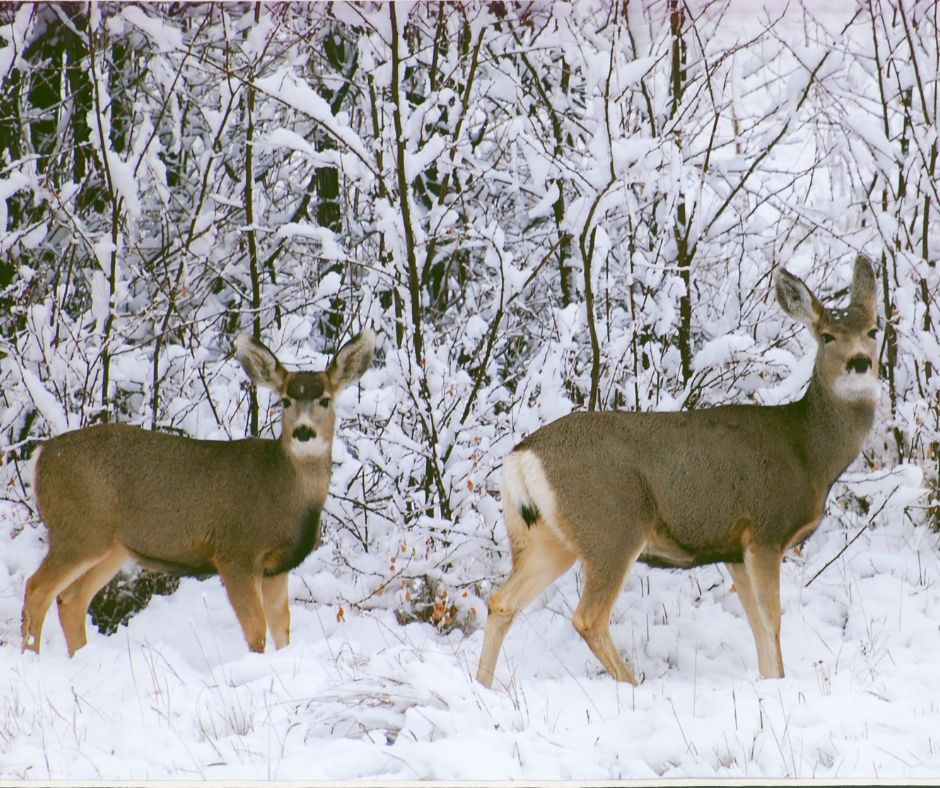
Lastly, providing habitat with trees and shrubs for cover and additional food resources during the winter are crucial steps to seeing wildlife thriving in your area. Selecting species that produce winter berries is another great way to provide food to many local wildlife types. Additionally, deer and other local wildlife like to hunker down in densely covered areas, such as wooded areas with evergreens, native prairie patches, or brush piles and dead trees. This allows them to bed down and be protected from the elements as well as provide them with food and nutrients from the winterized seeds and plant stalks. Dead trees and brush piles are another form of habitat and cover for wildlife. Birds and squirrels will use dead trees to nest, squirrels can hide nuts for the winter, and the organic material from the dying trees provides nutrients to the forest floor below. Leaving the dead leaves, trees, branches, and nuts is another way to help your local wildlife populations stay shielded from the elements. Insects, smaller wildlife, and amphibians will use branches, fallen logs, dead plant stalks, leaves, and other plant matter left behind to hide and overwinter until spring.
Planting trees, shrubs, and native vegetation with the intention of providing habitat and food for wildlife is something to start considering now for next winter! Rice Soil and Water Conservation District has a native tree and shrub sale happening right now into early spring. We provide evergreen species and tree and shrub species that provide berries through the winter – including American Cranberrybush, Red Splendor Crabapple, and Mackenzie’s Black Chokecherry. We will also have a native plant sale – open in early January so start planning your native areas now! For more information about our tree and native plant sale, visit our website at www.riceswcd.org.

Allison “Al” Henderson is a Resource Specialist with the Rice Soil & Water Conservation District. She assists landowners the Wetland Conservation Act and buffer strip implementation in Rice County. Contact Al with your wetland and buffer questions at 507-332-5408.

Comments