


Rethinking Wetland Improvements – How to Manage Wet Meadows Without Excavation

During the spring, when the snow is melting and the rain is more frequent, you’ll find those grassy low spots filling with water. While they may not look like much, these seasonal pools are often the first open, green, and available habitat spaces to many migrating species, amphibians, and other local wildlife!
Wetlands come in many shapes and sizes, and certain wetland types can have a lot of variability depending on the time of year. When folks think about a wetland, they probably think of a marshy open water system with cattails and maybe some waterfowl! However, there are also wetland types that flood and retain surface water during the wet seasons or during heavy rain events and return back to a drier, grassy low spot after the weather starts to warm up.

These seasonally wet areas, also known as wet meadows, are just as important for the local flora and fauna as a semi to permanently saturated marshy wetland. When these seasonally flooded areas are undisturbed, they offer a unique environment to local wildlife that otherwise may not be thawed or greened up when they need water, food, and a safe resting area. Amphibians will use these pools as breeding habitats, and waterfowl and shorebirds use them for early migration resting spots and for food.
Under the Wetland Conservation Act (WCA), filling, draining, and excavating are regulated. All wetlands in Minnesota are protected under the WCA and cannot be filled or drained wholly or partially, and semi to permanently flooded wetlands are not permitted to be excavated. Under the WCA, some excavation is permitted for seasonally flooded basins, pending approval from WCA authority. Many folks believe that semi to permanent standing water means that the wetland is of quality, however that is a misconception. These seasonal, wet meadows are crucial to local wildlife that rely on these intermittent pools for early spring life.
Before jumping to excavating these intermittently wet, low spots, consider management of the basin as it is! Because these low spots dry up for the summer season, a lot of these areas have been manipulated, farmed through, or left unmanaged. Due to the manipulation, these wet meadows tend to be covered in a monoculture of Reed canary grass (RCG) and other invasive species. RCG is a very common and fast-growing cool-season grass species found in low spots, wet ditches, and even in some upland areas, and it can be challenging to remove.

Managing for RCG, then replacing it with competing native species, is an effective way to make these wet meadow habitats into a productive system for the local wildlife. Reed canary grass can be treated with herbicide, burning, and mowing but there are factors to be mindful of. Mowing can be an effective start to management by cutting back dense patches of RCG that take growing space and sunshine away from other plants. Mowing will also stress the RCG, causing the plant to struggle to spread as quickly and densely. It is important to note that with mowing, you should not be mowing any RCG that has seed heads as that could result in more aggressive spreading. Burning is another extremely effective way to manage RCG. Much like with mowing, burning removes biomass, stresses RCG, and allows for an increase in light penetration for other species in the seed bank to grow. Once the excess biomass is eliminated via mowing and/or burning, herbicide is great for managing resprouts and to stunt growth to allow other species an opportunity to grow past the RCG. When using herbicide, it is crucial to read the labels to guarantee proper application and to ensure that the herbicide is safe for aquatic ecosystems.
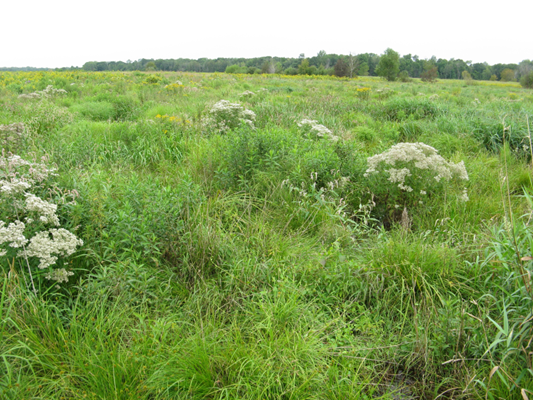
After the RCG has taken a hit, that is the time to seed and plant native grasses and forbs (flowers)! Certain species are better in wetter soil types than others, so when picking species, be mindful of the options available. Some potential native, cool-season grasses to select would be Canada Wild Rye, Wheatgrass, and Carex (sedge) species. Wet meadows are also home to many forb species. Planting wet-tolerant native flowers will boost the system with pollinators, insects, and songbirds. Examples of beneficial forb species for a wet meadow would be Joe-Pye weed, Swamp Milkweed, Blue Vervain, Mountain Mint, and many more. When looking for a seed mix to grow in wet meadows, many seed vendors carry mixes catered towards specific landscape types. Another great resource is the native seed mix lists from the Board of Water and Soil Resources (BWSR). They have a whole space on their site dedicated to offering native seed mix suggestions for countless ecosystems and landscape types – just look up BWSR Native Seed Mixes at https://bwsr.state.mn.us/seed-mixes, select your region (South & West OR Statewide for Rice County), and select what best represents the area you are looking to seed. Under the right care, the grassy low spots covered in RCG may transform into a beautiful, safe haven for so many local wildlife!

Allison “Al” Henderson is a Resource Specialist with the Rice Soil & Water Conservation District. She assists landowners with the Wetland Conservation Act and buffer strip implementation in Rice County. Contact Al with your wetland and buffer questions at 507-332-5408.

Comments