


Soil Health Bus Tour Connects Farmers with New Ideas and Each Other

Updated: Aug 26
A three-day trip to Illinois gave southeast Minnesota farmers an opportunity to learn, network, and bring home new ideas about soil health, strip-till, and innovative farming practices.
The Southeast Minnesota Soil Health Bus Tour brought farmers and agricultural professionals together August 5–7 for a trip to the 2026 National Strip-Till Conference in Springfield, Illinois. The tour was organized to provide in-depth learning and networking opportunities while connecting local farmers with researchers, industry professionals, and other producers from across the region.

The group traveled by charter bus and attended a pre-conference workshop at the Bayer Crop Science Research Farm in New Berlin, Illinois. Participants then traveled to Springfield for two full days of the National Strip-Till Conference, which featured educational sessions, farmer experiences, research updates, and opportunities to connect with others involved in strip-till and soil health.
But the learning started before the group ever arrived at the conference.
During the trip south, Ryan Buetow, Minnesota State Agronomist with the Natural Resources Conservation Service (NRCS), presented on different types of soil testing and how it can help farmers better understand the health and productivity of their soils.

Dave Sender of Environmental Tillage Systems (ETS) in Faribault also shared the story behind the company and the development of the Soil Warrior strip-till system. The presentation highlighted a piece of agricultural innovation with strong local roots.
The Soil Warrior was developed by Rice County farmer Mark Bauer, who grew up northeast of Faribault. Bauer began experimenting with reduced tillage practices in the 1980s and continued refining his approach over the following decades. His work eventually led to the development of the Soil Warrior strip-till machine and the formation of Environmental Tillage Systems.
That local connection became an especially meaningful part of the trip when Bauer was inducted into the Strip-Till Farmer Hall of Fame during the National Strip-Till Conference. The recognition honors Bauer's contributions to strip-till farming and his role in developing the Soil Warrior.

For the southeast Minnesota farmers on the bus, seeing a Rice County farmer recognized for his contributions to the industry was a unique opportunity to celebrate agricultural innovation that began right here at home.
The conference itself provided two days of opportunities to learn from farmers, researchers, and industry leaders about strip-till systems, soil health, nutrient management and emerging technologies. Just as valuable, however, were the conversations happening between sessions and on the bus.
On the return trip to Minnesota, farmers Scott Lightly and Tom Finnegan shared their experiences growing alternative crops, including winter camelina and sunflowers. Their presentations gave participants an opportunity to hear firsthand about crops that may offer new options for farmers looking to diversify their rotations or explore new markets.
Those informal conversations were a central part of the bus tour's purpose.
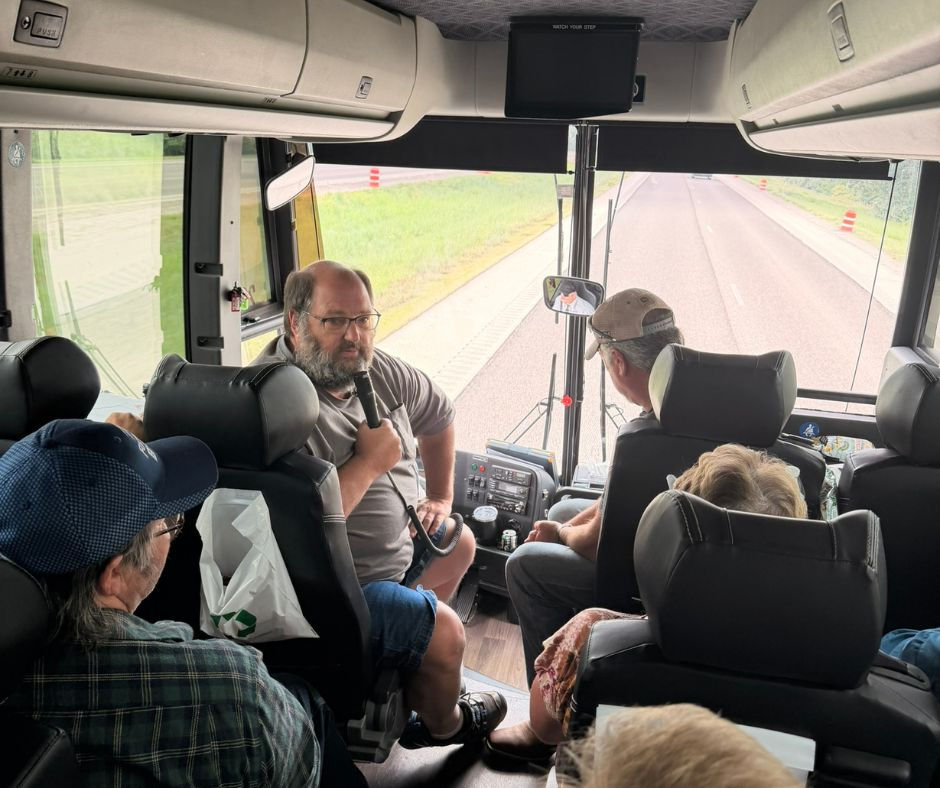
“This trip was about more than attending a conference,” said organizer Alan Kraus. “It was about bringing farmers together to learn from each other, hear from experts and see what other producers are trying on their farms. The goal was for everyone to return home with ideas they can evaluate and potentially put into practice.”
The Southeast Minnesota Soil Health Bus Tour was sponsored by the Minnesota Office of Soil Health, Rice Soil and Water Conservation District, Steele Soil and Water Conservation District, NRCS and the Freeborn Area Soil Health Team.
By combining presentations during the bus ride, a research farm visit, a national conference and farmer-to-farmer conversations, the tour provided participants with three days of learning that extended well beyond the conference sessions themselves.
For southeast Minnesota farmers, the trip was a chance to see new ideas, ask questions, make connections and learn from others working to improve the health and productivity of their soils.


Comments