


A Prairie Takes Root: Faribault Students Create a New Home for Pollinators at Jefferson Elementary

A new pocket of prairie habitat is taking root at Jefferson Elementary School in Faribault, creating a space where students, pollinators, and the community can grow together. Through a partnership between Jefferson Elementary, the Rice Soil & Water Conservation District (SWCD), and local conservation partners, a small stormwater infiltration basin near the school entrance has been transformed into a thriving native habitat with the planting of more than 2,000 native plants.

The project builds on Jefferson Elementary’s long history of supporting pollinators and outdoor learning. In 1994, teachers and community members established a native prairie near the school entrance that provided valuable habitat and served as an outdoor classroom for nearly three decades. When the school’s parking lot and drop-off area were redesigned in 2023, the original prairie was removed and replaced with two stormwater infiltration basins. The new restoration project brings native vegetation back to the site while adding ecological and educational value.
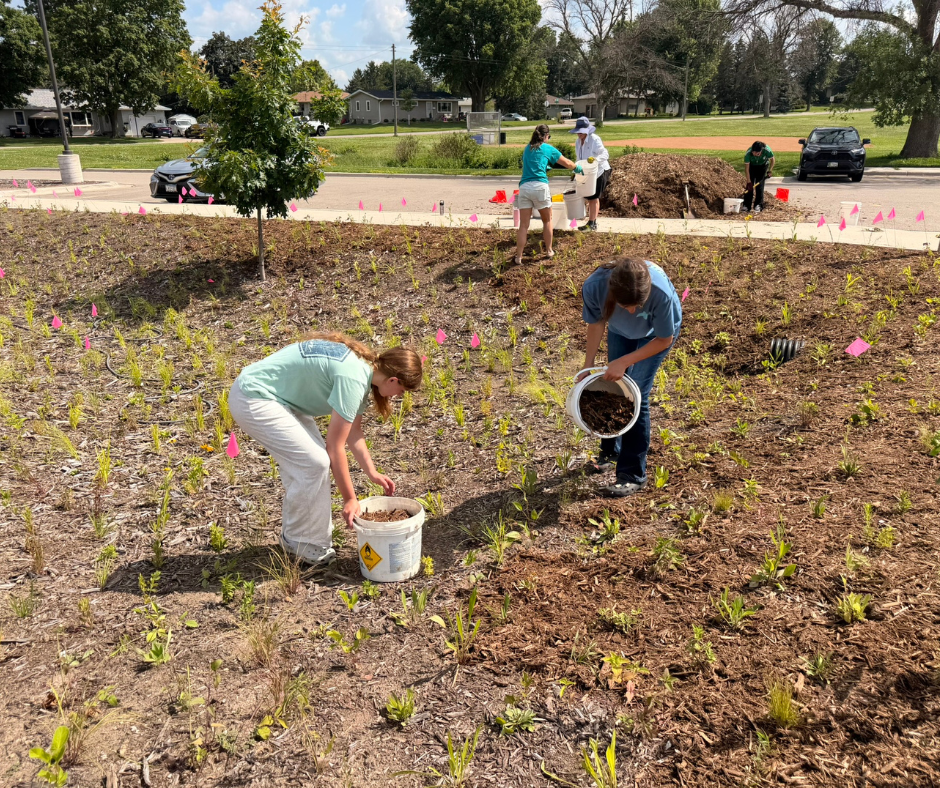
The first phase of the project focused on restoring the smaller infiltration basin with native plant plugs. In June, middle school students participating in the Summer STEAM program worked alongside staff and community volunteers to plant 68 flats of native plants, totaling more than 2,000 individual plants. The diverse mix includes wetland and upland prairie species selected to thrive in the site’s unique conditions while providing food and habitat for pollinators throughout the growing season.

After the planting was complete, high school students from the Summer Service Learning Program helped mulch the new prairie planting. Their work helped protect young plants, conserve soil moisture, and support successful establishment of the new habitat. These hands-on experiences gave students the opportunity to learn about conservation while making a lasting improvement to their school grounds.
The Jefferson Elementary Pollinator Habitat Project is about more than planting flowers. Native prairie plants have deep root systems that improve soil health, enhance stormwater infiltration, and reduce long-term maintenance needs. The restored area will also provide an outdoor classroom where students can observe pollinators, study plant life cycles, and explore ecological processes firsthand.

The project was made possible through generous community support including the Melinda Vaughn School Pollinator Fund, a $2,000 donation from Community Co-Op Faribault, funding from the 21st Century Community Learning Centers (21CCLC) program, and the expertise and partnership of the Rice SWCD. Additional support has come from Faribault School District staff, and community volunteers from Partners for Pollinators.
Future phases of the project will continue expanding pollinator habitat at the school. Plans include restoring the larger infiltration basin with a native prairie seed mix, creating additional opportunities for students and community members to participate in restoration and stewardship activities. Once established, the prairie will become a visible reminder of how conservation partnerships can improve local landscapes while creating meaningful learning experiences for students.
Community members can help support Jefferson Elementary’s prairie restoration efforts by participating in WINGSPAN, a fundraising event hosted by the Melinda Vaughn School Pollinator Fund. The Melinda Vaugn School Pollinator Garden Grant recipient for the 2026-2027 school year is Jefferson Elementary. The event will raise funds to support the pollinator habitat at the school, helping to create an outdoor learning space where students can connect with nature and make a positive impact in their community. The event will be held on Saturday, August 1st, 2026 at Keepsake Cidery just north of Faribault from 3:00 to 6:00 pm. Tickets can be purchased at https://www.schoolpollinators.org/events/wingspan-2026.

With thousands of native plants now in the ground, Jefferson Elementary’s new prairie is just beginning its journey. In the years ahead, this small corner of the school grounds will provide habitat for bees, butterflies, and other wildlife while inspiring generations of students to become conservation stewards.


Comments