


Students Learn Conservation Through Pocket of Prairie Program

This spring, more than 800 third-grade students throughout Rice County had the opportunity to learn about pollinators, native plants, and prairie habitat through the Rice Soil & Water Conservation District’s (SWCD) Pocket of Prairie Program. Now in its fourth year, the program continues to connect students with hands-on conservation education while encouraging families to create small pollinator-friendly spaces at home and at school.
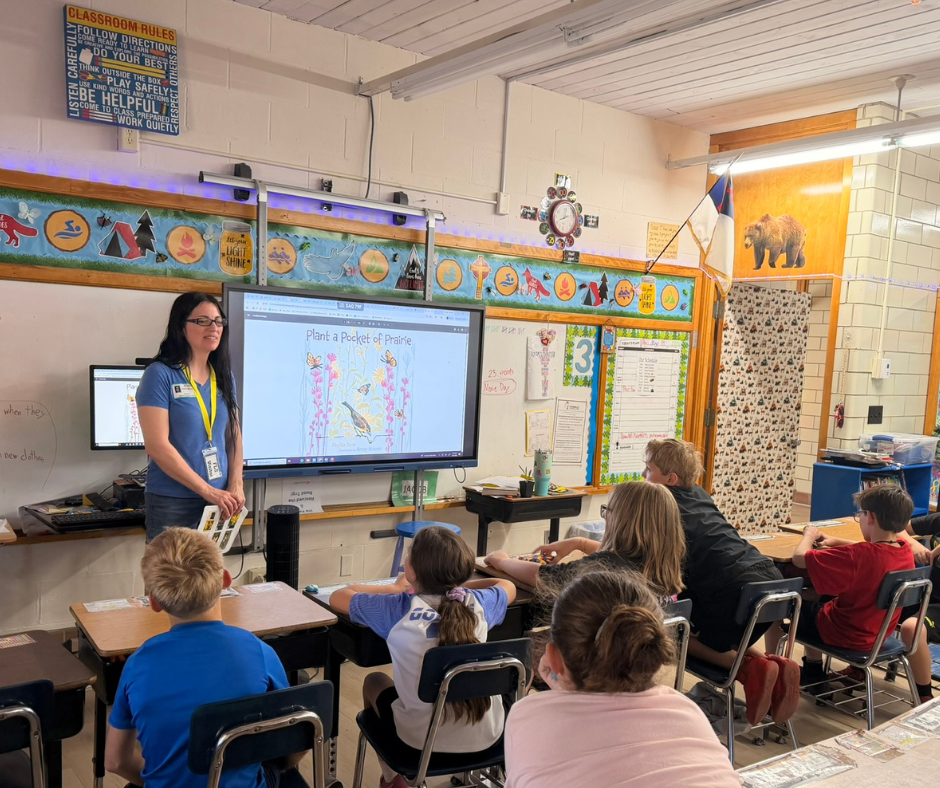
The Pocket of Prairie Program was inspired by the children’s book Plant a Pocket of Prairie and was introduced locally by Dr. Richard Huston, former Rice SWCD Supervisor and member of the Faribault Rotary Club. Through partnerships with organizations including the Faribault Rotary Club, Tri-Lakes Sportsmen’s Club, Le Sueur SWCD, and Wild Ones Southeast Minnesota Prairie Partners, the program has continued across the county.
Throughout May, District staff and collaborator volunteers visited classrooms to read the book, discuss the importance of native prairie habitat, and teach students how pollinators such as bees and butterflies depend on native flowers for food and shelter. Students also viewed photos and videos of pollinators and local native plantings before receiving a native prairie plant to take home and grow. The plants were generously donated by the Tri-Lakes Sportsmen’s Club.
Students from communities across Rice County—including Faribault, Northfield, Lonsdale, Nerstrand, and surrounding areas—participated in the program. By planting native flowers in yards, gardens, and school landscapes, students are helping create valuable habitat for pollinators while learning how small actions can make a positive environmental impact.
Some schools also incorporated the program into schoolyard planting projects. At Divine Mercy Catholic School, students added their prairie plants to an existing Pocket of Prairie native garden located on the school grounds, continuing efforts started in previous years.

“The Pocket of Prairie Program has been a wonderful way to introduce students to conservation and pollinator habitat,” said Teresa DeMars with the Rice Soil and Water Conservation District. “Students are excited to learn about butterflies, bees, and native flowers, and many are eager to plant their prairie flowers at home. It’s rewarding to see their enthusiasm for helping the environment.”
As the Pocket of Prairie Program continues to grow, Rice SWCD and its community partners hope the project will inspire more students and families to support pollinators by incorporating native plants into neighborhoods, schoolyards, and backyard gardens throughout Rice County.


Comments